The Sound That Starts Every Story
The first sound Elias hears every morning is not the fire.
It’s the leather.
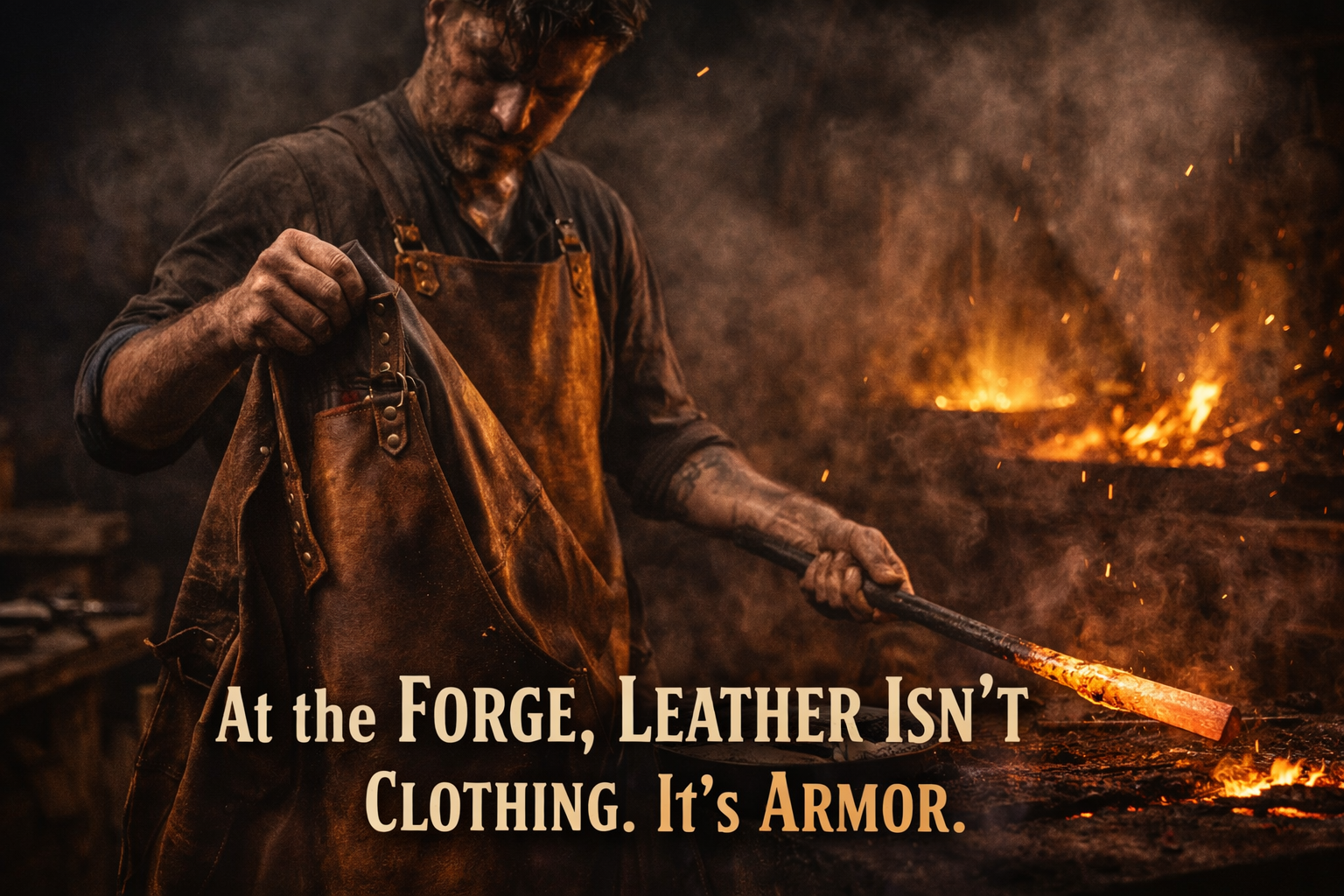
The low creak of his apron as he pulls it over his shoulders, tightens the straps, and steps toward the forge. That sound has followed him for twenty years. Before the hammer strikes steel, before sparks fly, the blacksmith apron takes its place between fire and flesh. Without it, the day would not begin.
Most people don’t notice the apron. They see the blade, the horseshoe, the iron gate. But Elias knows the truth. The work does not start with steel. It starts with leather.
Why a Leather Blacksmith Apron is Essential for Protection
In his early years, Elias tried what most beginners try. A canvas apron. Cheap. Light. Easy to replace. The first time a spark burned through it, he laughed. The second time, it scorched his skin. By the third time, he searched for something else.
That search led him to a blacksmith apron, leather thick enough to stop sparks mid-flight. A leather blacksmith apron that did not flinch when heat surged or slag fell. The day he put it on, he understood why generations before him trusted leather.
That was the moment the leather apron of a blacksmith stopped being gear and became a matter of survival.
Explore heritage-grade protection here:
Blacksmith Leather Aprons Collection
The Durability of a Genuine Leather Blacksmith Apron
A true leather apron blacksmith does not stay stiff. It learns.
It bends where the body bends. It softens at the waist, darkens at the chest, thickens at the edges where sparks strike again and again. Elias’s apron remembers every day he worked. No two blacksmith aprons ever age the same.
This is why mass-produced fabric fails in the forge. But full-grain leather blacksmith apron designs grow stronger with time. They don’t tear. They don’t melt. They don’t panic in heat. They adapt.
That is why professional smiths still search for a leather apron for blacksmithing instead of modern substitutes.
Understanding the Weight of Your Blacksmith Apron
A blacksmithing apron is not meant to feel light. Its weight is its promise. When Elias lifts molten steel, the thick leather apron absorbs heat before it reaches his body. When sparks rain down, the leather absorbs impact. When steel slips, leather stands in the way.
This is the unspoken rule of the forge:
The heavier the apron, the safer the smith.
That’s why serious craftsmen invest in:
- leather apron black
- industrial leather apron
- leather apron PPE
- vintage leather blacksmith apron
Each one was built for danger, not appearance.
Built for real heat:
Industrial & Blacksmith Aprons
Custom Fit, Not Costume
Elias never bought a standard size again. A forge doesn’t forgive loose straps or poor balance. His current apron is one of his most valuable tools—a custom leather blacksmith apron designed to move with him.
The cross-back leather straps distribute weight evenly. The chest coverage protects vital areas. The length shield thighs from falling slag. This is not fashion. This is engineering.
That’s why experienced smiths search for:
- custom leather blacksmith aprons
- blacksmith leather apron pattern
- craftsman leather shop apron
A blacksmith apron must fit the body the way armor fits a warrior.
When the Apron Outlives the Man
In the corner of Elias’s workshop hangs an old, vintage leather apron. It belonged to his mentor. Cracked, darkened, scarred—but still whole. The man is gone. The apron remains.
That is the difference between leather and everything else.
A leather apron for a blacksmith doesn’t expire. It carries forward. Some are passed down. Others are repaired and reused. This is why people search for the repair shop leather apron and why old Amish leather apron designs still exist.
Leather does not disappear. It stays.
More Than Blacksmithing: Leather Across Trades
Once you recognize it, you see leather aprons everywhere. But the forge is where it earns its respect. From here, leather spreads outward.
Welders rely on a leather welding apron with sleeves and a black leather welding apron to survive sparks hotter than firewood. Farriers trust a farrier apron leather when working beneath horses. Machinists choose leather machinist apron designs for sharp metal edges. All of them borrow from the same ancestor: the blacksmith apron leather.
The forge taught leather how to work.
Care That Respects the Craft
People often ask Elias how to clean a leather apron or how to wash a leather apron. He always answers the same way.
You don’t wash history. You maintain it.
A damp cloth. Gentle soap. Air drying. Occasional conditioning. That’s it. A genuine leather apron does not want chemicals or machines. It wants patience.
Treated well, a leather blacksmith apron does not weaken. It settles.
Why Blacksmiths Never Ask “Why Leather?”
Search engines ask:
- What are leather aprons used for
- What’s the main benefit of a leather apron
Blacksmiths never do.
They already know the answer every time a spark hits leather and dies. Every time the heat stops at the apron. Every time skin remains untouched. Leather is not optional in the forge. It is essential.
A blacksmith apron is not about style, comfort, or trend. It is about going home unburned.
The Final Sound of the Day
At sunset, the forge cools. The hammer rests. Elias removes his apron and hangs it back on the wall. It is heavier now than it was this morning—not in weight, but in story.
Another day recorded in leather.
Tomorrow, the fire will rise again. Steel will scream under the hammer. Sparks will fly. And before any of that happens, the leather will be the first thing Elias reaches for.
Because in blacksmithing, the story is never written in steel alone.
It is written in leather first.