

What Is Leather?
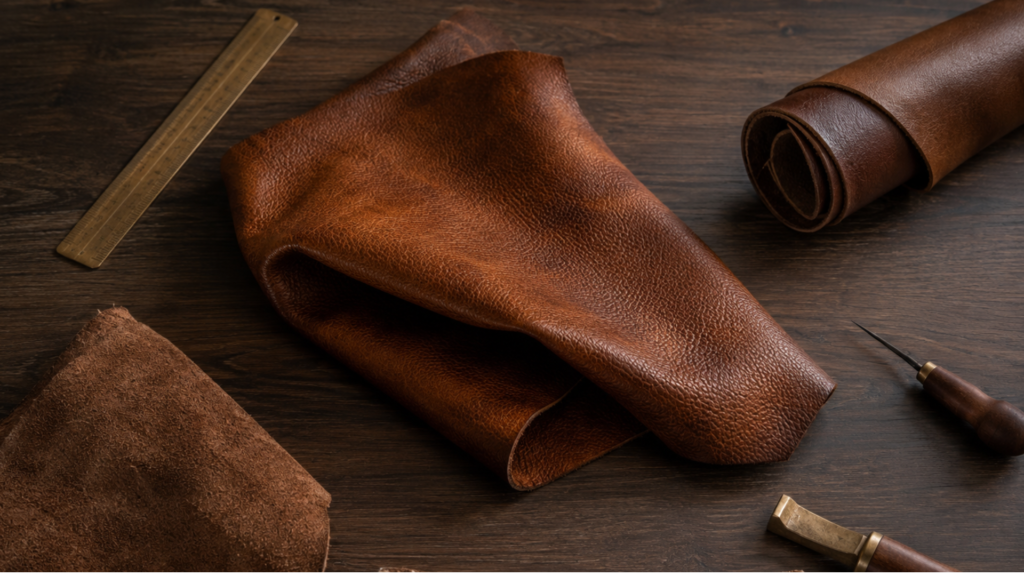
Leather is a natural material made from animal hides that have been treated through a process called tanning. This process prevents the hide from naturally decomposing and transforms it into a strong, flexible, and long-lasting material that can be used for clothing, footwear, bags, furniture, and many other products.
Tanning stabilizes the natural proteins in the hide, allowing leather to remain durable for many years instead of breaking down like untreated skin. This is what gives leather its strength and makes it suitable for everyday use.
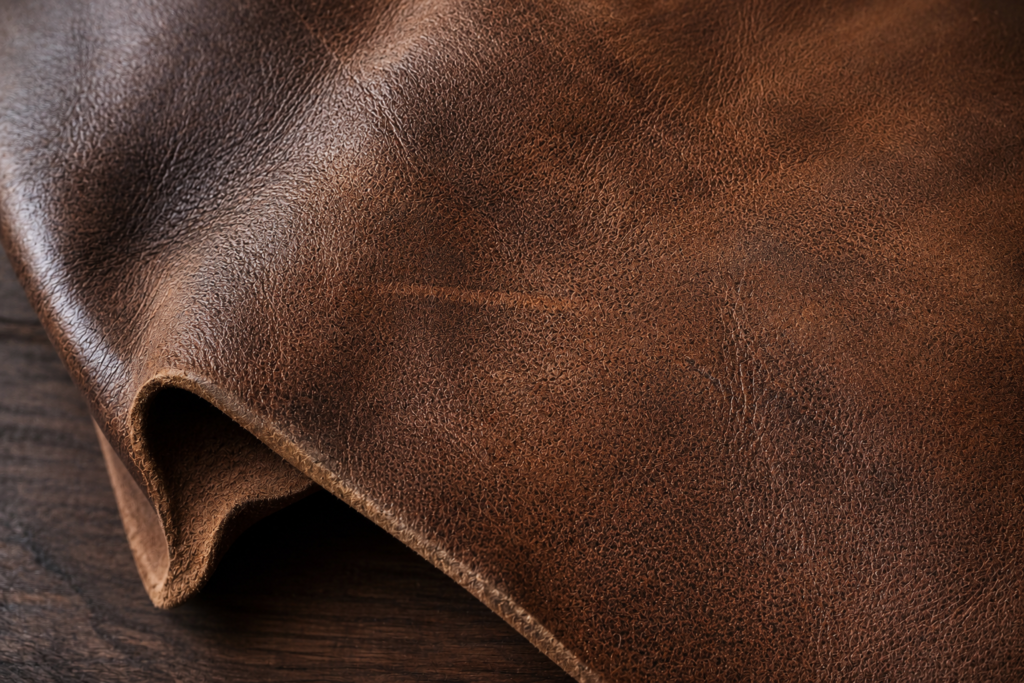
One of leather’s biggest advantages is its unique combination of durability, flexibility, and breathability. It can withstand regular wear, adapt comfortably to movement, and allow better airflow than many synthetic materials. Over time, real leather also develops a rich patina—a natural change in appearance that adds character and makes each piece unique.
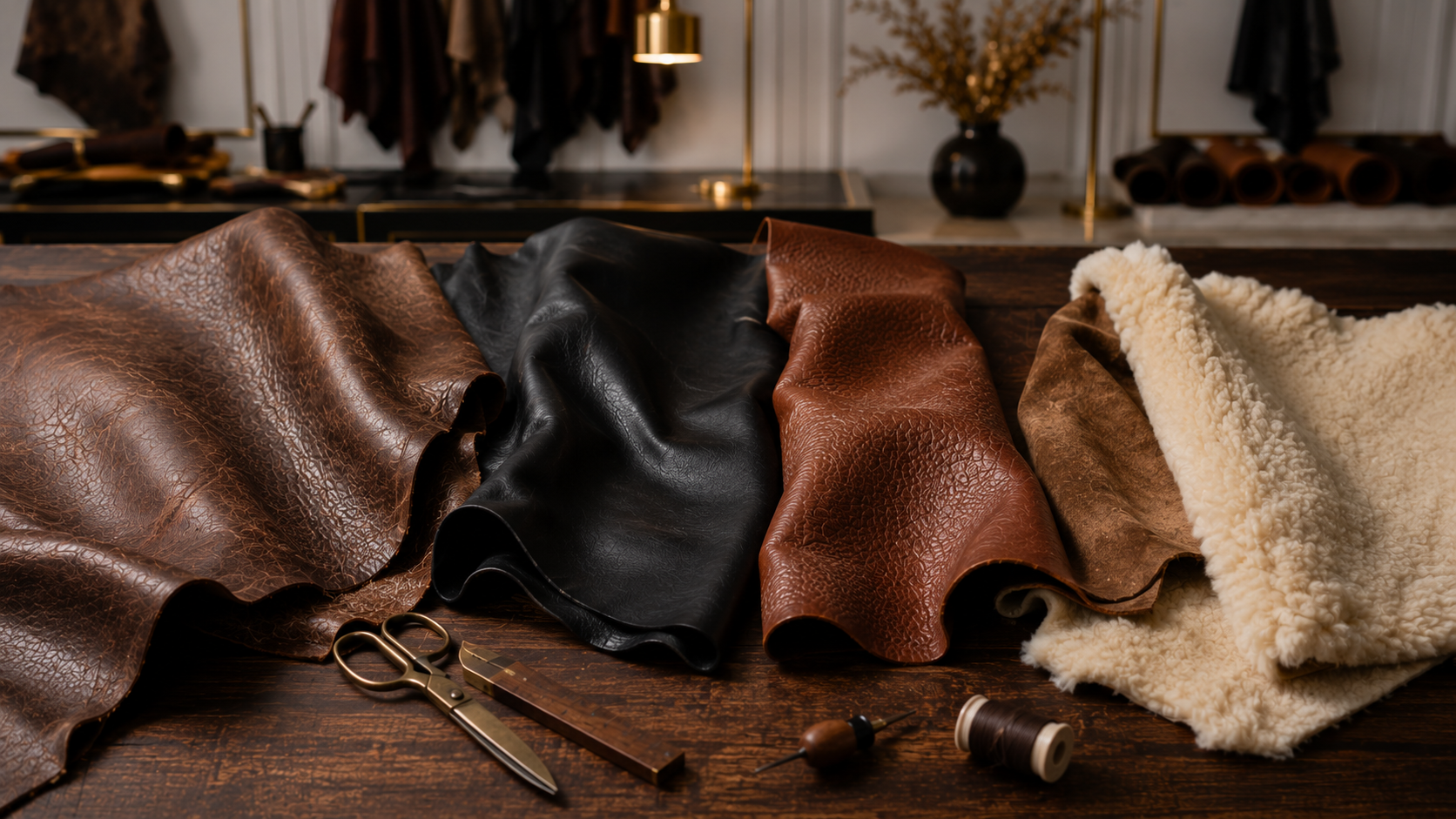
Most leather used in jackets and accessories comes from cows, lambs, and sheep. Each type has its own texture, weight, softness, and performance, making it suitable for different styles and purposes. We’ll explore these leather types in more detail later in this guide.
Before comparing different leather types and grades, it’s helpful to understand where leather came from and how it has evolved over thousands of years.
Now that you understand what is leather, it’s easier to appreciate how it is made and why different leather types perform differently.
A Brief History of Leather
Leather has been part of human history for thousands of years. Long before modern clothing existed, early humans used animal hides to protect themselves from cold weather, rain, and rough environments. Over time, they discovered that treating hides made them stronger, more flexible, and better suited for everyday use.
As civilizations developed, so did leather-making techniques. Ancient Egyptians used leather for sandals, bags, shields, and decorative items, while people in Mesopotamia began experimenting with natural tanning materials such as tree bark and plant extracts. The Greeks and Romans further improved leather craftsmanship, using it for armor, footwear, belts, and military equipment because it offered durability without excessive weight.
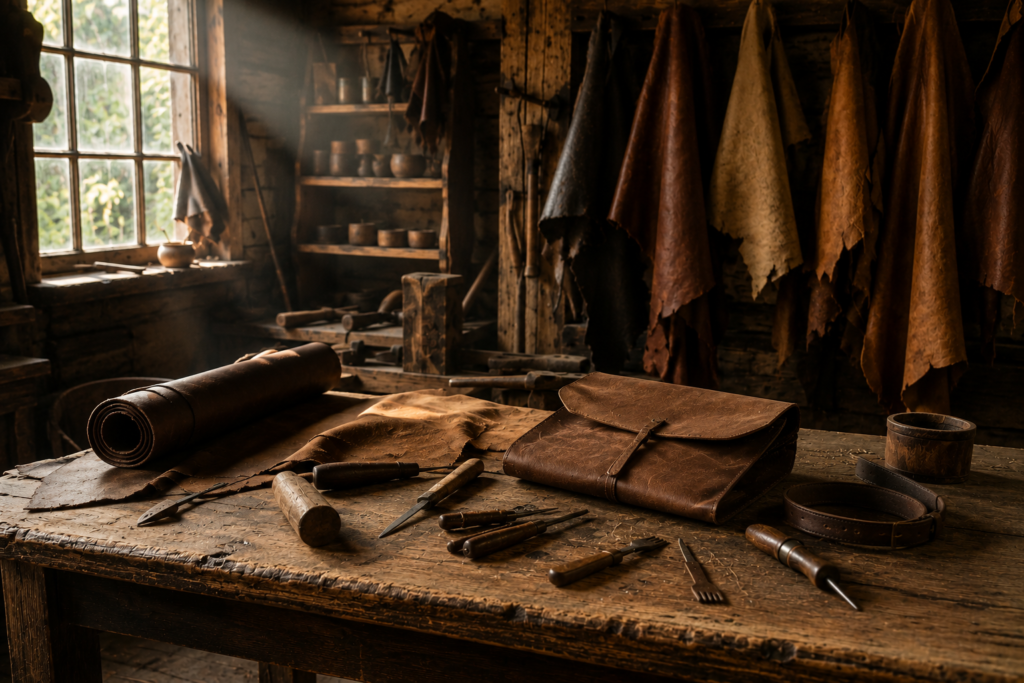
During the Middle Ages, leather became an essential material for everyday life. Skilled craftsmen produced boots, saddles, armor, bookbindings, and other goods that were valued for their strength and long service life. Leatherworking gradually evolved into a respected trade that required experience and precision.
The Industrial Revolution transformed leather production by introducing improved tanning methods and modern machinery. These advancements made leather more consistent in quality and more widely available, while still preserving many traditional techniques.
Today, leather remains one of the most trusted materials for jackets, footwear, furniture, automotive interiors, and accessories. Its durability, comfort, and timeless appearance have helped it remain popular across generations.
Now that you know how leather evolved over time, let’s look at how a raw animal hide is transformed into the leather we use today.
Understanding “what is leather “ becomes even more interesting when you look at its long history.
HOW LEATHER IS MADE?
From Hide to Finished Leather
Turning an animal hide into usable leather involves several carefully controlled steps, and each one affects the quality of the final product.
The process begins with hide collection. Most leather comes from cows, lambs, and sheep that are already raised for meat, making the hide a by-product of the food industry. Using the hide also helps make use of a material that might otherwise be discarded.
Next, the hides are cleaned and preserved. Because fresh hides begin to decompose naturally, they are usually salted or chilled to slow bacterial growth and keep them in good condition before they reach a tannery.
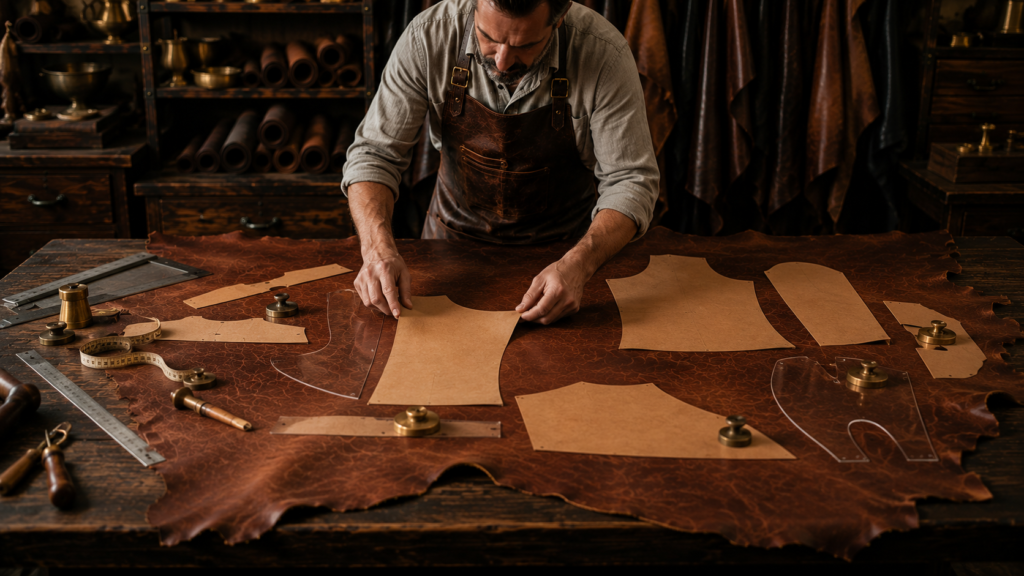
Expert Insight: Hide preservation is one of the least visible yet most important stages of leather production. Even premium-quality hides can lose value if they are not preserved correctly before tanning. Careful handling at this early stage helps maintain the hide’s fiber structure, creating a stronger and more consistent finished leather.
Once preserved, the hide goes through tanning—the process that transforms it from a perishable material into durable, long-lasting leather. We’ll look at how tanning works in the next section.
After tanning, the leather is dyed to achieve its final color and finished to improve its texture, appearance, and performance. Depending on its intended use, it may also receive protective finishes.
Before the leather is used to make jackets, bags, shoes, or other products, it undergoes a quality inspection. Specialists check its thickness, strength, texture, and surface for any defects to ensure it meets the required standards.
Now that you understand the overall process,what is leather, let’s take a closer look at the most important step: tanning.
Understanding Leather Weight and Thickness
One detail many leather guides overlook is leather weight—how thick the hide actually is. Leather thickness is typically measured in ounces (oz) or millimeters (mm), and it plays an important role in how a jacket feels, performs, and ages over time. While leather grade reflects overall quality, thickness influences comfort, flexibility, durability, and the jacket’s intended use.
Lighter leathers, usually around 2–3 oz (approximately 0.8–1.2 mm), are commonly used for lambskin fashion jackets because they feel soft, lightweight, and comfortable from the first wear. Heavier leathers, typically 5–7 oz (approximately 2–2.8 mm), are more common in cowhide motorcycle jackets, workwear, and protective gear, where greater structure, durability, and abrasion resistance are important.
Expert Insight: Leather thickness is not perfectly uniform across an entire hide. Experienced pattern cutters often position major jacket panels on the back and shoulder sections, where the fibers are naturally denser and more consistent, while softer areas such as the belly are typically reserved for smaller components or less demanding applications.
Neither thickness is inherently better than the other. A lightweight leather jacket offers excellent comfort and flexibility for everyday wear, while a heavier hide provides the strength and durability needed for more demanding conditions. The best choice depends on how the jacket will be used, the climate, and the balance you prefer between comfort, protection, and long-term durability.
What Is Tanning
Tanning is the process that transforms a raw animal hide into durable leather that can last for many years without naturally decomposing. It is the most important step in leather production because, without tanning, a hide would eventually dry out, become brittle, or begin to decay.
Raw animal hides contain natural proteins, mainly collagen. Tanning stabilizes these proteins, preventing them from breaking down over time. As a result, the hide is permanently transformed into a strong, flexible, and stable material that is suitable for everyday use.
Without tanning, a hide would not be practical for making jackets, shoes, bags, or other leather goods. It would lose its strength, become stiff, and eventually deteriorate. Long before leather became a fashion material, tanning helped people create durable clothing, footwear, and tools for everyday life.
Modern tanning still follows the same basic principle, but different methods are used depending on the desired look, feel, performance, and production process. The two most common methods are chrome tanning and vegetable tanning, each with its own characteristics and advantages.
Let’s look at how these two tanning methods compare.
Chrome Tanning vs Vegetable Tanning
Once a hide is ready for tanning, manufacturers typically choose between two main methods: chrome tanning and vegetable tanning. Both produce durable leather, but they create different qualities in the finished material.
Chrome tanning uses chromium salts to stabilize the hide. It is the most widely used modern tanning method because the tanning process itself is relatively fast, often taking just one or two days. However, additional steps such as retanning, dyeing, drying, and finishing are still required before the leather is ready for use. The finished leather is typically soft, flexible, and requires little to no break-in period.
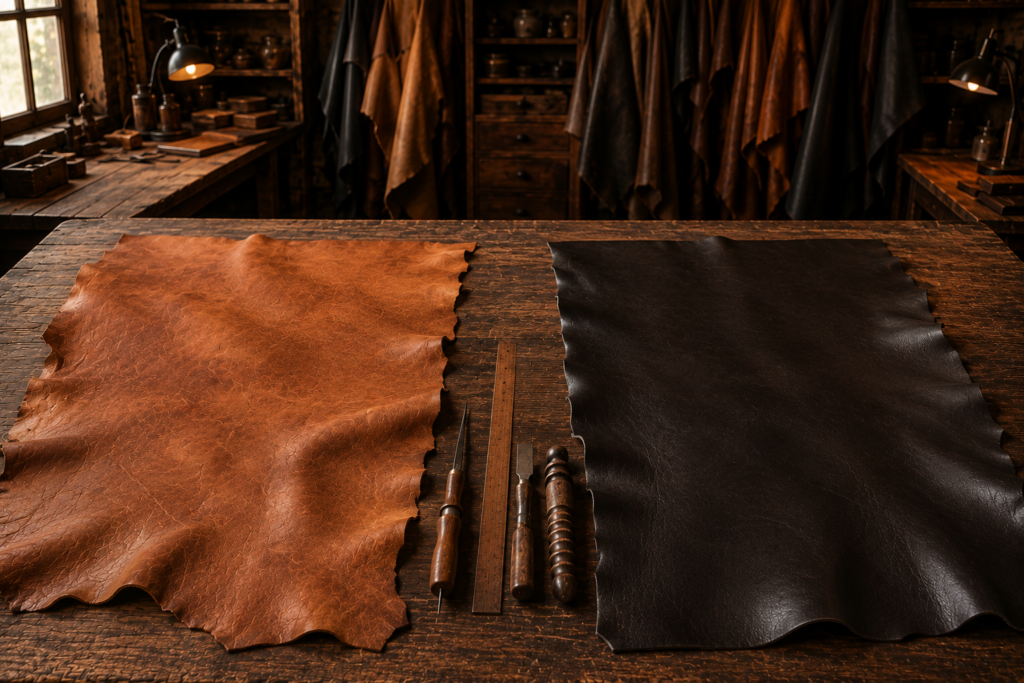
Vegetable tanning uses natural tannins found in tree bark, leaves, and other plant materials. This traditional process usually takes longer, ranging from several days to several weeks, depending on the method. It produces firmer leather that gradually softens with use and develops a rich patina over time.
| Feature | Chrome Tanned Leather | Vegetable Tanned Leather |
|———|———————–|————————–|
| Processing Time | Usually 1–2 days | Several days to several weeks |
| Feel | Soft and flexible | Firmer at first, softens over time |
| Durability | Durable for everyday use | Durable with proper care |
| Appearance | Smooth and consistent | More natural-looking grain |
| Patina | Usually develops less visible patina | Develops a rich patina with age |
| Common Uses | Jackets, bags, gloves, upholstery | Belts, wallets, boots, saddlery |
Neither tanning method is universally better than the other. The right choice depends on how the leather will be used and the qualities you’re looking for. Many high-quality leather products are made using both methods, each offering its own advantages.
Now that you understand how tanning affects leather, let’s look at the different animals that leather commonly comes from.
How Leather Is Dyed and Finished
Tanning preserves the hide, but it doesn’t determine the leather’s final appearance. After tanning, the leather is dyed and finished—a stage that influences its color, texture, durability, stain resistance, and how it ages over time. The type of finish also affects how much of the leather’s natural grain remains visible.
Aniline leather is dyed using transparent, soluble dyes that allow the hide’s natural grain, pores, and markings to remain fully visible. Because it has little or no protective surface coating, it develops a rich patina over time but is also more susceptible to stains, moisture, and scratches.
Semi-aniline leather begins with the same dyeing process but receives a thin protective topcoat. This provides better resistance to everyday wear and staining while preserving much of the leather’s natural appearance, making it a popular balance between beauty and practicality.
Pigmented leather is finished with an opaque protective coating that creates a more uniform color and surface. Although it hides more of the leather’s natural character, it offers the greatest durability, improved stain resistance, and easier maintenance, making it well suited for products that experience frequent daily use.
There is no single “best” leather finish. The right choice depends on your priorities. If you value natural character and the development of patina, aniline leather is often preferred. If you want a balance between authenticity and everyday practicality, semi-aniline leather is an excellent option. For maximum durability, color consistency, and low maintenance, pigmented leather is usually the better choice.
Expert Insight: The choice between chrome tanning and vegetable tanning is about performance as much as appearance. Chrome-tanned leather generally accepts dye more consistently across large production runs, while vegetable-tanned leather naturally develops greater variation and character over time. Neither approach is inherently superior—they simply suit different products and priorities.
| Finish Type | Natural Look | Patina | Stain Resistance | Maintenance | Best For |
|---|---|---|---|---|---|
| Aniline | Excellent | Excellent | Low | High | Luxury jackets, leather goods |
| Semi-Aniline | Very Good | Very Good | Medium | Medium | Everyday jackets |
| Pigmented | Good | Limited | High | Low | Daily wear, furniture, workwear |
The Most Common Animals Used for Leather
Not all leather comes from the same animal, and that’s one of the main reasons leather jackets can feel so different from one another. Every type of hide has its own texture, thickness, flexibility, and natural grain, which affects how the finished leather looks, feels, and performs over time.
For leather jackets, the three most common types are cowhide, lambskin, and sheepskin. Each has its own strengths. Some are known for durability, while others are valued for their softness, lightweight feel, or comfort. The best choice depends on how and where the jacket will be worn.
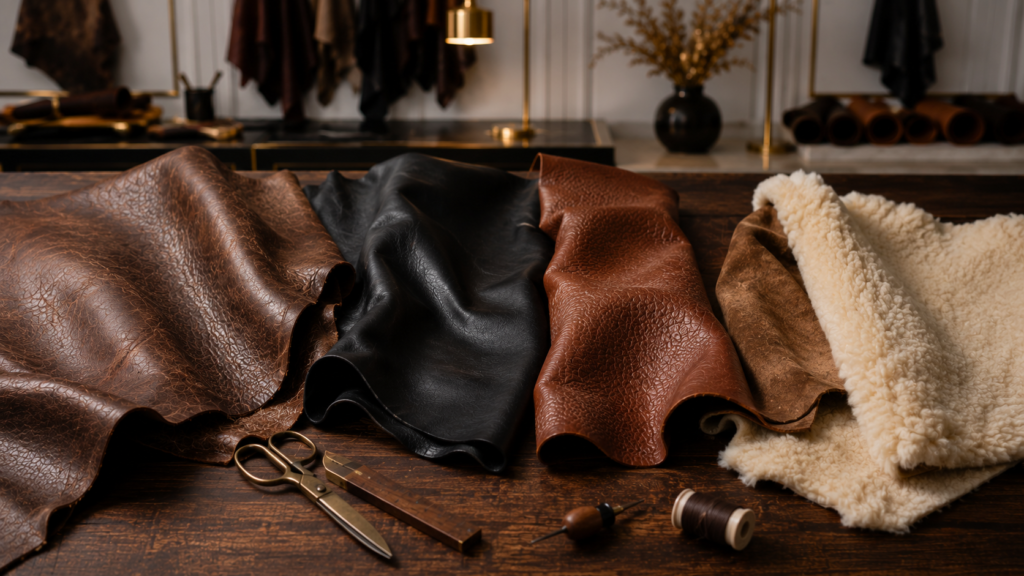
You may also come across leather made from goats, buffalo, or deer. Although these are less common in everyday leather jackets, they are still used for certain styles and specialized products because of their unique characteristics.
When choosing leather, there isn’t a single “best” option. Factors such as durability, softness, weight, flexibility, and appearance all play an important role. Understanding these differences makes it much easier to choose a leather jacket that fits your needs and personal preferences.
Let’s begin with the most widely used leather for jackets: cowhide leather.
Cowhide Leather
Cowhide leather is made from the hide of cattle and is one of the most widely used types of leather in the world. Like most commercial leather, it is generally produced as a by-product of the meat industry, allowing the hide to be used instead of discarded.
One of the main reasons cowhide is so popular is its strength. It is naturally thicker than many other types of leather, giving it a firm feel and excellent durability. This makes it well suited for everyday wear and products that need to withstand regular use.
Cowhide also has a distinct natural grain that gives each piece a unique appearance. No two hides are exactly alike. With time and regular use, cowhide often develops a richer appearance and a natural patina, adding character without losing its durability.
Expert Insight: Not every section of a cowhide performs exactly the same. Areas along the back and shoulders typically have tighter fiber structure and greater consistency, while the belly is naturally softer and more flexible. This is one reason two jackets described simply as “cowhide” can still differ in feel, structure, and long-term performance.
Because of these qualities, cowhide has become one of the most common choices for leather jackets. It offers a balance of strength, structure, and long-term performance, making it a popular option for people who want a jacket that can last for many years with proper care.
In addition to jackets, cowhide is widely used for motorcycle gear, biker jackets, bomber jackets, belts, bags, wallets, and other leather goods where durability is important.
While cowhide is known for its strength, some people prefer leather that feels softer and lighter from the beginning. That’s where lambskin leather offers a different experience.
Lambskin Leather
Lambskin leather comes from the hide of young sheep and is known for being one of the softest and most refined types of leather commonly used for clothing. Its smooth surface and lightweight feel make it a popular choice for people who want comfort without sacrificing style.
One of lambskin’s defining features is its softness. It has a fine, smooth grain and a naturally flexible structure that allows it to move comfortably with the body. Because it is lightweight, a lambskin jacket is often easy to wear for long periods without feeling heavy or restrictive.
These qualities make lambskin a popular material for fashion leather jackets. It drapes naturally, feels exceptionally soft to the touch, and creates a clean, elegant appearance. Many people appreciate that lambskin jackets are comfortable from the first wear, with little or no break-in period.
Lambskin is also widely used for gloves, handbags, wallets, and other leather accessories where softness and flexibility are especially valued.
Although lambskin is durable with proper care, it is generally less resistant to scratches and heavy abrasion than thicker leathers. Regular cleaning, proper storage, and occasional conditioning can help keep it looking its best for many years.
While lambskin is valued for its softness and comfort, another popular option—sheepskin—offers a different combination of warmth, comfort, and performance. Let’s take a closer look at sheepskin leather.
Sheepskin Leather
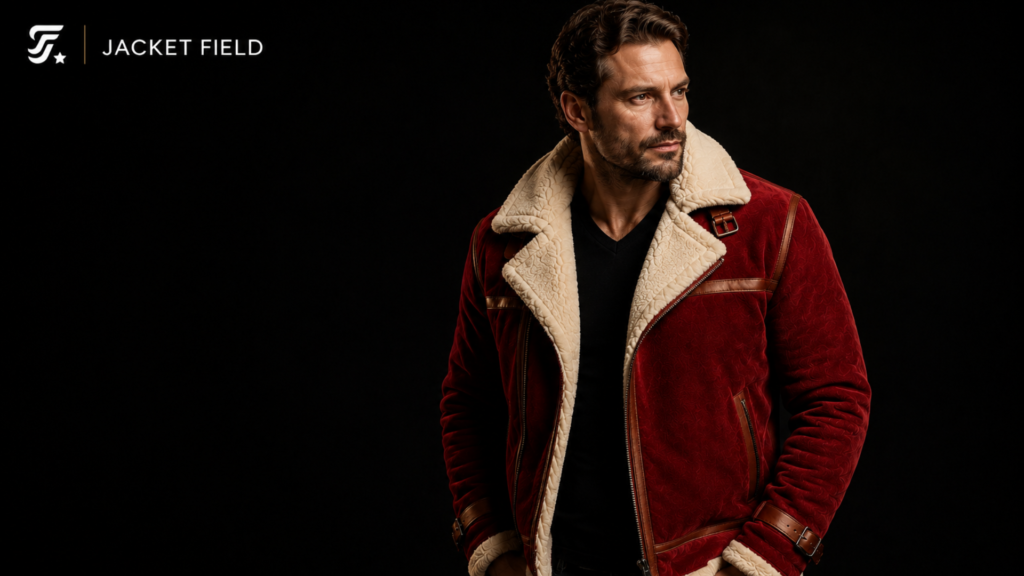
Sheepskin leather comes from the hide of adult sheep and is valued for its natural warmth and comfort. Some sheepskin products keep the wool attached to the hide, while others are processed into smooth leather with the wool removed. Both forms are widely used, depending on the product.
One of sheepskin’s most noticeable qualities is its ability to provide warmth without feeling overly heavy. The natural wool fibers help trap body heat while still allowing air to circulate, making sheepskin comfortable to wear in cold weather.
In addition to its warmth, sheepskin is soft, flexible, and lightweight for its level of insulation. When the wool is left intact, it creates a soft lining that adds comfort and helps regulate temperature.
Because of these qualities, sheepskin is commonly used for winter jackets, aviator jackets, slippers, boots, gloves, and other cold-weather clothing. It is especially popular in products designed to provide warmth during colder seasons.
Although sheepskin is durable enough for everyday use, it is generally chosen for comfort and insulation rather than heavy abrasion or motorcycle protection. With proper care, sheepskin products can remain comfortable and attractive for many years.
Although cowhide, lambskin, and sheepskin are the most common leathers used for jackets, they are not the only options available. Several other types of leather are also used for specialized products and unique applications.
Other Types of Leather
Beyond cowhide, lambskin, and sheepskin, several other types of leather are also used for clothing, accessories, and specialty products. While they are less common in everyday leather jackets, each has its own unique characteristics.
Goatskin leather is known for being lightweight while offering good durability. It has a naturally textured surface and is commonly used for gloves, bags, wallets, and some casual jackets.
Buffalo leather is thicker than many other leathers and has a rugged appearance. Because of its strength, it is often used for work boots, belts, travel bags, and other heavy-duty products.
Deer leather is valued for its soft, flexible feel. It is comfortable to wear and is often chosen for gloves, footwear, and other products where flexibility is important.
Exotic leathers, such as crocodile, ostrich, and snake leather, are less common and are usually found in luxury or specialty products. These leathers are often chosen for their distinctive natural patterns and textures rather than everyday use.
Although many types of leather are available, cowhide, lambskin, and sheepskin remain the most common choices for everyday leather jackets. They offer a practical balance of durability, comfort, and versatility for different styles and needs.
Now that you know where leather comes from, the next step is understanding how leather is graded and what those grades tell you about quality.
Full-Grain Leather
Full-grain leather is generally considered the highest grade of leather because it keeps the strongest and most natural part of the hide intact. It comes from the outermost layer of the hide, where the natural grain remains untouched. Unlike other leather grades, this surface is not sanded or heavily altered during processing.
Because the natural grain is left intact, full-grain leather keeps its original texture and markings. You may notice small scars, wrinkles, or slight color variations across the surface. These are not defects. Instead, they are natural features that show the leather is genuine and has undergone very little surface correction.
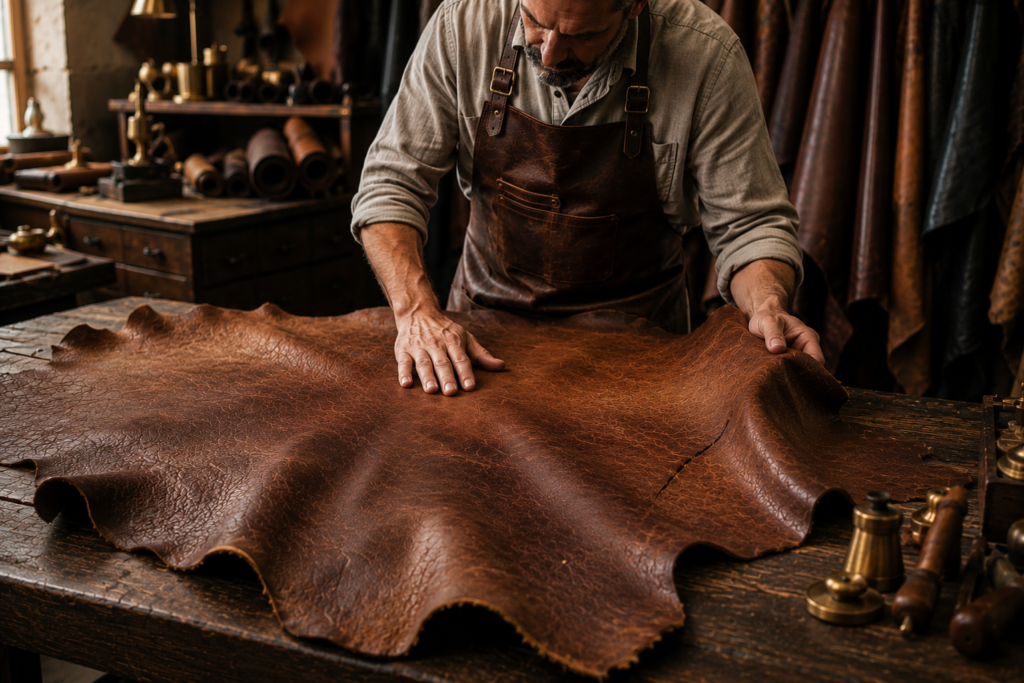
It helps to understand the difference between natural characteristics and genuine defects. Natural characteristics include healed scratches, faint insect bite marks, subtle wrinkles around the neck and shoulder areas, and slight variations in color or grain density. These marks are part of the animal’s natural life and do not reduce the leather’s strength or durability. True manufacturing defects, however, are different. Uneven thickness that creates weak spots, poorly repaired tears, or uneven dye absorption that leaves patchy coloring may affect appearance or performance. Natural characteristics add authenticity and make every hide unique, while genuine manufacturing defects can affect both appearance and long-term durability.
Since only high-quality hides are selected, there is usually no need to hide or remove these characteristics.
One of the reasons many people value full-grain leather is its durability. The strong outer layer helps it stand up well to regular use while remaining breathable and comfortable to wear. Over time, it also develops a rich patina—a gradual change in color and texture caused by everyday wear, sunlight, and natural oils from your skin. Rather than looking worn out, full-grain leather often gains more character as it ages.
You’ll often find full-grain leather in high-quality jackets, boots, belts, bags, and other leather goods where long-term durability and natural character are important. With proper care, products made from full-grain leather can remain in good condition for many years.
Full-grain leather is only one of several leather grades you’ll come across. Another common option is top-grain leather, which is processed a little differently while still offering good quality.
Top-Grain Leather
Top-grain leather comes from the outer layer of the hide, just like full-grain leather. The difference is that its surface is lightly sanded or buffed to remove small scars, wrinkles, and other natural marks. This gives the leather a smoother and more even appearance while keeping much of its natural strength.
Even after this extra processing, top-grain leather is still considered a high-quality leather. Its smooth surface gives it a clean, refined look that appeals to many people. It also feels soft and flexible, making it comfortable to wear from the beginning without much break-in time.
Top-grain leather is known for its good durability and everyday practicality. It stands up well to regular use and is generally easier to care for than full-grain leather. Because the surface has been refined, it is often more resistant to stains and easier to clean, making it a popular choice for products that are used frequently.
One difference to keep in mind is how it ages. Since some of the natural grain has been removed during sanding, top-grain leather develops less patina over time than full-grain leather. It still becomes softer with use, but the changes in color and texture are usually more subtle.
You’ll often find top-grain leather used in jackets, handbags, wallets, shoes, furniture, and other everyday leather goods where a smooth finish and reliable durability are both important.
Like every leather grade, top-grain leather has its own strengths. Understanding how it is made can help you choose the right material for your needs. Another leather term you’ll often see on product labels is genuine leather, and it’s one of the most misunderstood names in the leather industry.
Genuine Leather
If you’ve shopped for leather goods before, you’ve probably seen the term “genuine leather” more than any other. It sounds like it should refer to the highest quality, but the meaning is a little different. Understanding what this label actually means can help you make better buying decisions.
The first thing to know is that genuine leather is real leather. It is not fake, synthetic, or faux leather. However, “genuine leather” is a broad industry term rather than a specific quality grade. It simply tells you that the product is made from real animal hide, without saying much about the overall quality of the leather.
Many products labeled as genuine leather are made from the layers beneath the top grain after the highest-quality outer layer has been removed. These layers can still produce durable leather, but the final quality depends on how the material is processed, finished, and manufactured.
Compared with full-grain and top-grain leather, genuine leather is generally less durable and develops less patina over time. Even so, it remains a practical choice for many everyday products and can provide good performance when properly made and cared for.
You’ll often find genuine leather used in wallets, belts, bags, shoes, furniture, and some leather jackets, especially where affordability is an important consideration.
One common misconception is that genuine leather always means poor quality. That’s not necessarily true. While the label alone doesn’t guarantee premium leather, it doesn’t automatically mean the product is low quality either. A well-made genuine leather product can last for years. Instead of relying only on the label, it’s worth considering the craftsmanship, stitching, construction, and overall finish before making a purchase.
Knowing what “genuine leather” really means makes it easier to understand the differences between leather grades. Another type you’ll often come across is corrected-grain leather, which is processed differently to create a more uniform appearance.
Corrected-Grain Leather
Corrected-grain leather is real leather that has been processed to create a smoother and more uniform appearance. During manufacturing, the surface of the hide is lightly sanded or buffed to remove natural scars, wrinkles, and other imperfections that may be present on the grain.
After the surface is corrected, manufacturers often emboss an artificial grain pattern onto the leather. This gives it a consistent texture and appearance, making different pieces look more alike even though every animal hide is naturally unique.
Corrected-grain leather is known for its smooth finish, good durability, and practical performance. The protective coating applied during finishing can make it more resistant to stains, scratches, and everyday wear than many natural-grain leathers. These qualities make it a popular choice for products that are used regularly and need a clean, consistent look.
Because the original grain has been altered, corrected-grain leather doesn’t show the same natural markings or develop the same character over time as leather that keeps its original surface. Instead, it is designed to provide a more even appearance while still offering the strength and flexibility of real leather.
You’ll often find corrected-grain leather used in furniture, shoes, handbags, belts, and some leather jackets, where consistency, durability, and easy maintenance are important.
Corrected-grain leather isn’t intended to preserve the hide’s original appearance. Instead, it offers a practical balance of durability, uniformity, and everyday usability for a wide range of leather products.
Another leather material you’ll often come across is bonded leather, which is made in a very different way from the leather grades we’ve covered so far.
Bonded leather
Bonded leather is different from the other leather grades we’ve covered because it isn’t made from a single, solid piece of hide. Instead, it’s created by combining leftover leather scraps and fibers with adhesives, then pressing the mixture onto a backing material such as fabric or paper.
Although bonded leather contains real leather, it usually makes up only a portion of the final material. The rest consists of bonding agents and other materials that hold everything together. This gives bonded leather a smooth, uniform appearance without the natural grain and unique markings found in higher-quality leather.
One of the biggest advantages of bonded leather is its affordability. Because it uses recycled leather fibers, it costs much less to produce than full-grain, top-grain, or genuine leather. For this reason, it’s often used in budget-friendly products.
The trade-off is durability. Bonded leather doesn’t hold up as well as higher leather grades. With regular use, especially in areas that bend or rub frequently, it may begin to peel, crack, or separate over time. Heat, sunlight, and moisture can also shorten its lifespan.
You’ll often find bonded leather in affordable furniture, office chairs, book covers, belts, wallets, and decorative accessories. While it can be a practical option for light use, it isn’t usually the best choice if you’re looking for a product that will last for many years.
Before we compare all leather grades side by side, there are two more leather types worth understanding. Unlike bonded leather, suede and nubuck are valued for their soft texture and distinctive appearance rather than their smooth finish.
Suede and Nubuck
Suede and nubuck are often mentioned together because both have a soft, velvety texture. Even though they look similar, they’re made differently, and those differences affect how they feel, how durable they are, and how much care they need.
Suede leather is made from the underside of an animal hide. This inner layer is naturally soft and flexible, giving suede its well-known velvety feel. Because of its texture, suede is comfortable to wear and is commonly used in fashion items. However, its open surface absorbs moisture and dirt more easily than smooth leather, so it needs regular care to keep it looking its best.
Nubuck leather is made from the outer layer of the hide, the same strong layer used for full-grain and top-grain leather. Instead of leaving the surface smooth, it’s lightly sanded to create a fine, velvet-like finish. Since nubuck comes from the stronger outer layer, it’s generally more durable than suede while still offering a soft, comfortable feel.
Both suede and nubuck are widely used in jackets, shoes, boots, gloves, handbags, and other accessories where a soft, textured appearance is preferred. Their unique finish gives products a more casual and refined look than smooth leather.
Because both materials have a slightly porous surface, they require extra care. Using a suede or nubuck brush, protecting them from excessive moisture, and cleaning stains promptly can help maintain their appearance for years.
Now that you’ve explored the major leather grades and finishes, it’s easier to see how each one differs. In the next section, we’ll compare them side by side so you can quickly understand which type is best for different needs.
Leather Grades Compared
With so many leather grades and finishes available, choosing the right one can feel confusing. Looking at them side by side makes it easier to understand how they differ in durability, feel, appearance, and typical uses, helping you make a more informed decision.
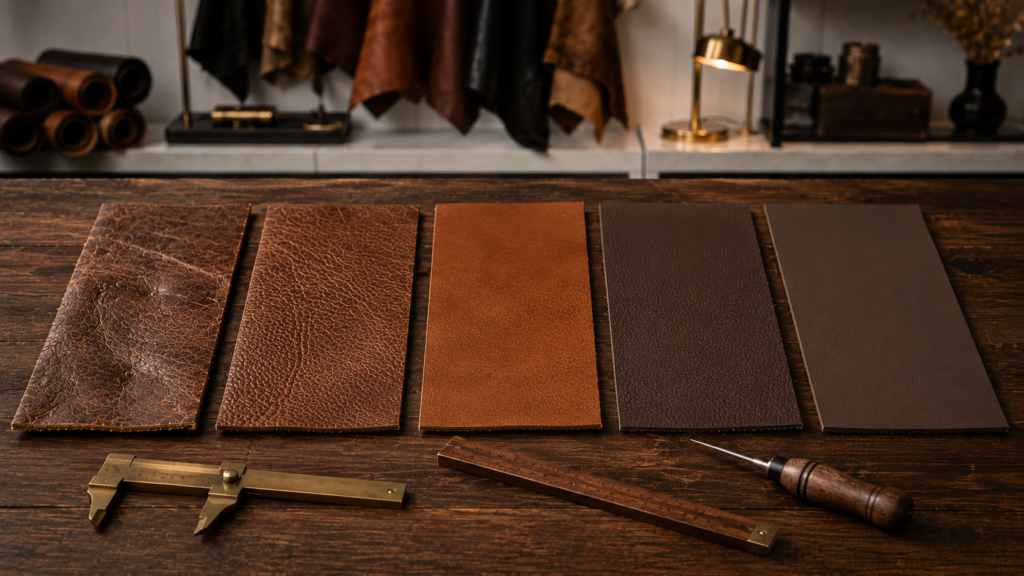
| Leather Type | Source Layer | Durability | Feel | Develops Patina | Common Uses | Typical Price |
| Full-Grain Leather | Outer layer, untouched | Excellent | Firm, natural texture | Yes | Premium jackets, boots, bags | High |
| Top-Grain Leather | Outer layer, lightly sanded | Very Good | Smooth and soft | Slightly | Jackets, handbags, wallets, shoes | Medium–High |
| Genuine Leather | Lower split layers | Fair to Good | Varies by finish | Minimal | Wallets, belts, bags, some jackets | Medium |
| Corrected-Grain Leather | Sanded with embossed grain | Good | Smooth, uniform | Very little | Furniture, shoes, belts, jackets | Medium |
| Bonded Leather | Bonded leather fibers and scraps | Low | Firm, uniform | No | Budget furniture, book covers, wallets | Low |
| Suede | Underside of the hide | Fair | Soft, velvety | No | Jackets, shoes, gloves, accessories | Medium |
| Nubuck | Sanded outer layer | Good | Soft, fine texture | Slightly | Jackets, boots, gloves, bags | Medium–High |
No single leather grade is the right choice for everyone. The best option depends on how you plan to use it, the level of durability you need, your budget, and the look and feel you prefer. Understanding these differences makes it much easier to choose leather that fits your needs.
Leather vs Faux Leather
Introduction
Walk into almost any store, and you’ll find jackets labeled “real leather,” “faux leather,” or “vegan leather,” often with very different price tags. It’s no surprise that many shoppers aren’t sure what sets them apart or which one is worth buying.
Both real leather and faux leather have their own advantages and limitations. The right choice depends on how you plan to use the product, your budget, and what matters most to you, whether that’s durability, appearance, or ease of care.
Before making a decision, it’s helpful to understand how these materials differ. Let’s start by looking at the key differences between real leather and faux leather.
Key Differences
The biggest difference between real leather and faux leather is the material they’re made from. Real leather comes from animal hide that’s been tanned, while faux leather is a synthetic material, usually made from plastics like polyurethane (PU) or PVC, designed to imitate the look of real leather.
That difference in material shows up in appearance and texture right away. Real leather has natural grain, subtle imperfections, and slight variations from piece to piece, since no two hides are exactly alike. Faux leather, on the other hand, tends to look more uniform and consistent, since it’s manufactured rather than grown.
Durability is another area where the two materials behave differently. Real leather is generally more durable over the long run and can last for many years, sometimes decades, with proper care. Faux leather is often less durable, and its lifespan depends heavily on the quality of the synthetic material used.
Breathability also sets them apart. Real leather allows air to pass through it, which makes it more comfortable in changing temperatures. Faux leather doesn’t breathe the same way, so it can feel warmer or stickier against the skin, especially in hot weather.
When it comes to maintenance, real leather usually needs conditioning and occasional care to stay soft and prevent cracking, while faux leather generally requires less upkeep and is easier to wipe clean.
Perhaps the biggest difference shows up over time. Real leather develops a natural patina, aging in a way that adds character. Faux leather doesn’t age the same way, it tends to peel, crack, or flake as it gets older, especially with regular use.
Now that you understand the main differences, let’s compare real leather and faux leather side by side in a simple table.
Comparison Table
Real Leather vs Faux Leather Comparison
Putting real leather and faux leather side by side makes it easier to understand how they differ. Instead of looking at one feature at a time, this comparison gives you a quick overview so you can decide which material better fits your needs and preferences.
| Feature | Real Leather | Faux Leather |
| Material | Animal hide that has been tanned | Synthetic material, usually PU or PVC |
| Source | Natural by-product of the meat industry | Manufactured from synthetic materials |
| Appearance | Natural grain with unique markings | Uniform, consistent appearance |
| Texture | Soft, flexible, and natural feel | Smooth but may feel synthetic |
| Durability | Long-lasting with proper care | Shorter lifespan, varies by quality |
| Breathability | Naturally breathable | Less breathable |
| Water Resistance | Naturally water-resistant but not waterproof | Often more water-resistant |
| Maintenance | Needs occasional cleaning and conditioning | Easy to clean with little maintenance |
| Aging | Softens and develops character over time | May peel or crack over time, depending on quality |
| Patina | Develops a natural patina | Does not develop a patina |
| Environmental Considerations | Uses animal by-products; environmental impact depends on sourcing and tanning | Made from synthetic materials; environmental impact varies by material and manufacturing |
| Price | Usually more expensive | Usually more affordable |
| Common Uses | Jackets, boots, bags, belts, furniture | Jackets, shoes, bags, upholstery, accessories |
Neither material is the right choice for everyone. Real leather is often preferred by people who want long-term durability and the natural character that develops with age. Faux leather can be a practical option for those looking for a lower price, easier maintenance, or a non-animal material. The best choice depends on your budget, intended use, personal preferences, and how much maintenance you’re comfortable with.
Now that you’ve compared both materials side by side, the next step is learning how to tell real leather from faux leather when you’re shopping.
Which One Should You Choose?
There is no single “best” choice when it comes to real leather and faux leather. The right option depends on what matters most to you and how you plan to use the item.
Choose real leather if you want something that can last for many years with proper care. It is a good option for people who value long-term durability, enjoy the natural look of leather, and appreciate how it develops character as it ages. While it usually costs more at first, many people see it as a long-term investment because of its strength and lifespan.
Faux leather may be the better choice if you have a smaller budget, want a material that is easy to clean, or prefer not to use animal leather. It often works well for people who want a stylish look without the higher price or extra care that real leather may require.
Before making a decision, think about how you will use the item. Will you wear it every day or only once in a while? How much are you comfortable spending? Are you willing to spend time on regular care, or would you rather have something that needs little maintenance? Comfort, climate, and your personal values can also play an important role.
Both materials have their own strengths, and neither is the right choice for everyone. By considering your budget, intended use, comfort, maintenance needs, and personal preferences, you can choose the material that fits your lifestyle best.
Now that you know how to choose between real leather and faux leather, let’s look at How to Identify Real Leather.
How to Identify Real Leather
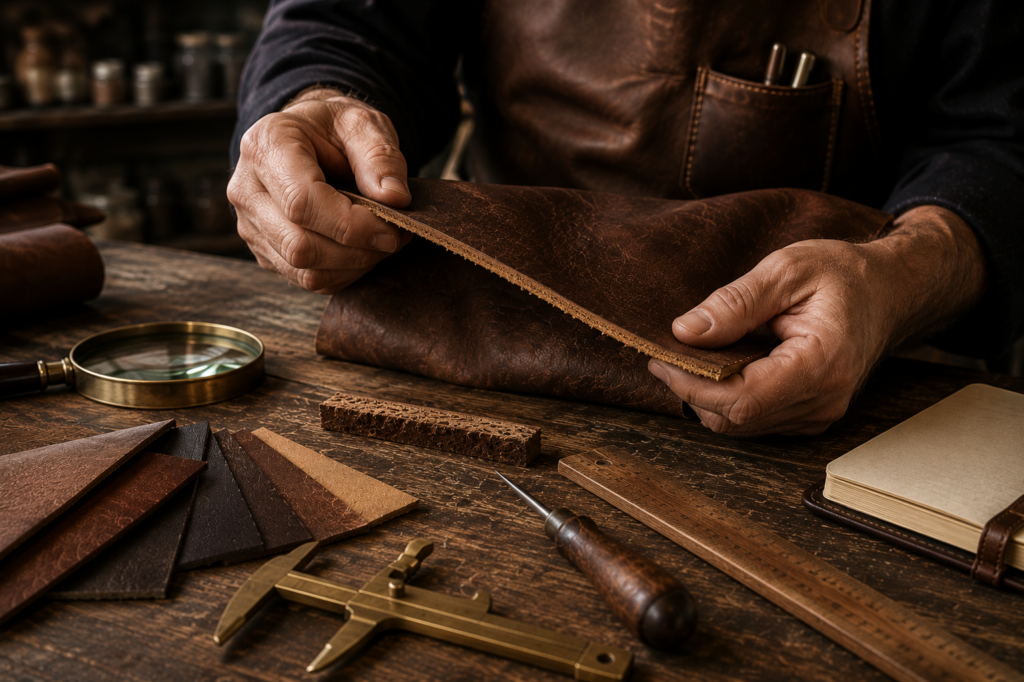
At first glance, many leather products look almost identical, whether they’re made from real leather or a synthetic alternative. Labels can help, but they don’t always tell the whole story, and terms like “genuine leather” can sometimes cause confusion. That’s why it’s useful to know a few simple checks you can do yourself before buying. You don’t need special tools or expert knowledge—just a closer look and a basic understanding of what to look for. Let’s start with the clearest signs that can help you identify real leather.
Signs of Real Leather
One of the first things you’ll notice about real leather is its natural grain. Since it comes from an animal hide, every piece has slight imperfections, such as small marks, wrinkles, or subtle changes in texture. These aren’t defects—they’re a natural part of the material and often indicate that the leather hasn’t been heavily altered.
Real leather also isn’t perfectly uniform. If you look closely at a jacket, bag, or pair of shoes, you’ll usually notice small variations across the surface. Faux leather, on the other hand, tends to have a more even and consistent appearance because it’s manufactured.
Another clue is the smell. Real leather has a distinctive, earthy scent that many people recognize right away. Faux leather often has little scent or may smell like plastic or chemicals, especially when it’s new.
That natural scent comes from a combination of the tanning, dyeing, and finishing processes rather than the leather alone. Vegetable-tanned leather often develops a warmer, more earthy aroma, while chrome-tanned leather typically has a milder scent. However, the exact smell can vary depending on the tannery, the oils, waxes, dyes, and finishing treatments used during production. Although genuine leather often has a pleasant, natural aroma, , scent alone should never be used to judge quality or authenticity. Instead, evaluate it alongside other indicators such as the natural grain, texture, flexibility, stitching quality, and overall craftsmanship.
The way leather feels is just as important. Real leather is soft yet firm, and it bends and flexes naturally without feeling stiff or rubbery. When you press it gently, the surface may form small wrinkles before returning to its original shape.
If you examine it closely, you may also notice natural pores and grain patterns. These tiny details come from the original hide and are difficult to reproduce exactly with synthetic materials.
One of the clearest signs appears over time. Instead of simply wearing out, real leather gradually softens and develops more character. It may darken slightly in areas of frequent use and develop a natural patina, giving each item a unique appearance.
These signs can help you recognize real leather with greater confidence. For an even closer inspection, there are a few simple, non-destructive tests you can try before making a purchase.
Simple Tests You Can Do
Before making a purchase, there are a few safe, simple checks you can do that may help you tell whether a product is made from real leather. While no single test gives a definite answer, using several of them together can give you more confidence.
Start by reading the product label carefully. Terms such as full-grain leather, top-grain leather, or genuine leather usually indicate that the product contains real leather. Labels like faux leather, vegan leather, PU leather, or PVC leather refer to synthetic materials. Keep in mind that labels alone don’t always tell the whole story.
Next, feel the surface with your hands. Real leather usually has a natural texture with slight variations instead of feeling perfectly smooth or uniform.
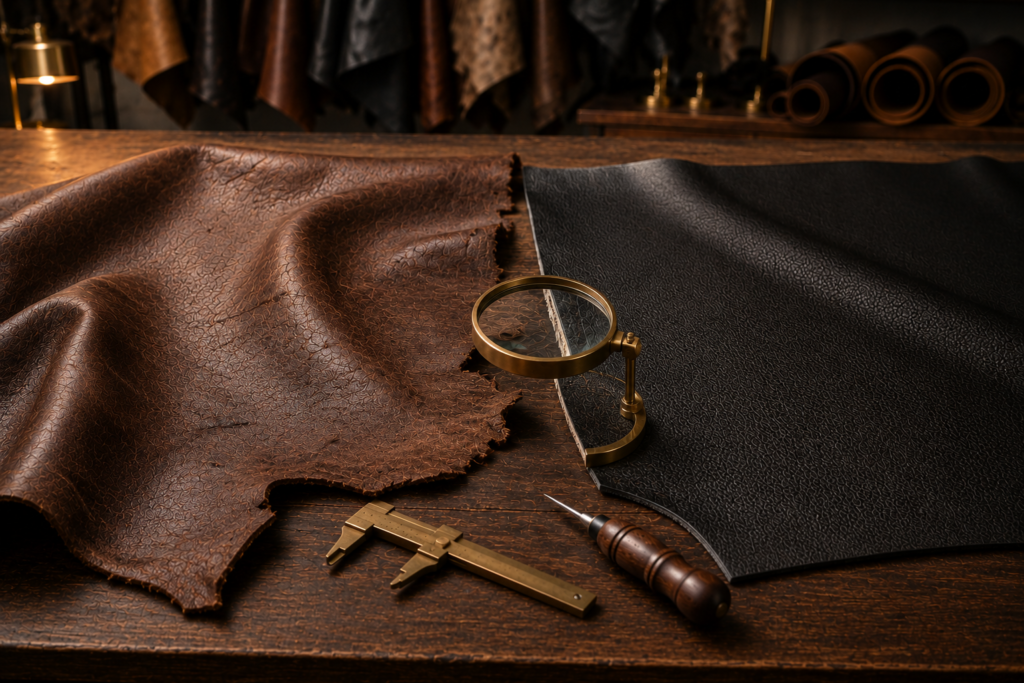
Take a close look at the grain and the edges as well. Genuine leather often has irregular grain patterns, and the cut edges may appear slightly fibrous because they come from a natural hide. Synthetic materials usually have more consistent patterns and cleaner-looking edges.
Smell can also provide a useful clue. Real leather has a distinctive natural scent, while faux leather may smell like plastic or chemicals, especially when it’s new.
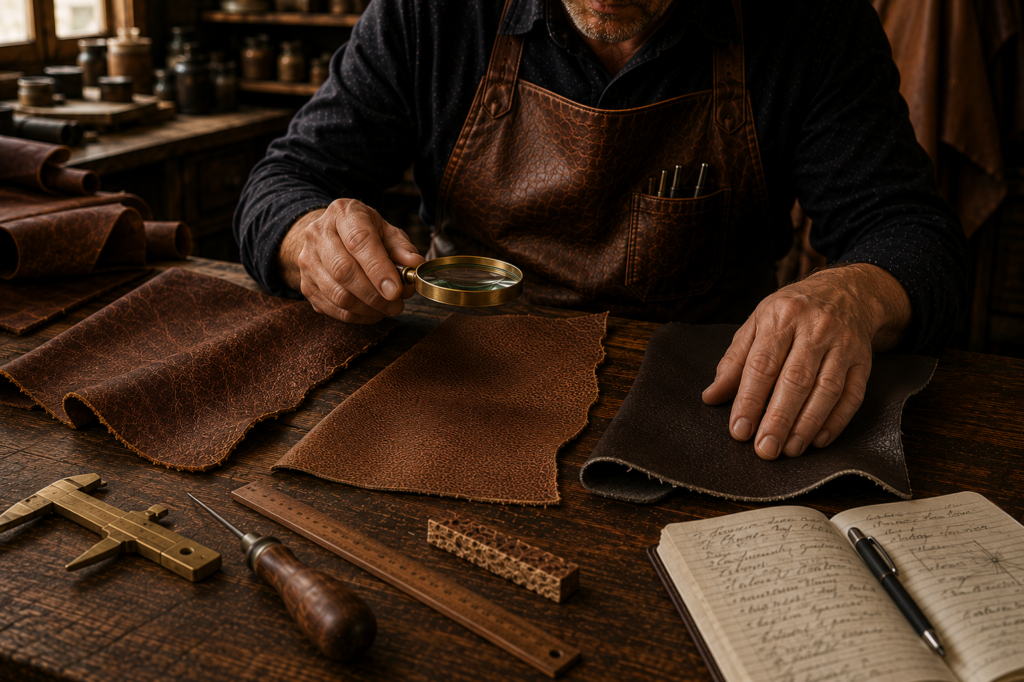
If you want to inspect leather more closely, a few additional checks can provide greater confidence. Examine the edge finish first—a well-crafted leather product usually has edges that are folded, painted, or burnished rather than left rough or fraying. Next, look at the grain across the entire panel instead of focusing on a single area. Genuine leather typically shows natural variations, while heavily embossed or corrected leather often has a more uniform, repeating pattern. If you have access to a magnifying glass, the pores on genuine leather appear irregular and uneven, whereas embossed patterns tend to look more consistent and repetitive.
Finally, gently bend or press the material. Real leather normally flexes easily and forms small natural wrinkles before returning to its shape. Faux leather often bends more uniformly and may feel stiffer.
No single test is completely reliable on its own. Looking at the label, texture, grain, smell, and flexibility together will usually give you a much better idea of what you’re buying.
Even with these simple checks, many buyers still make avoidable mistakes when shopping for leather products. Let’s look at the most common ones next.
Common Mistakes Buyers Make
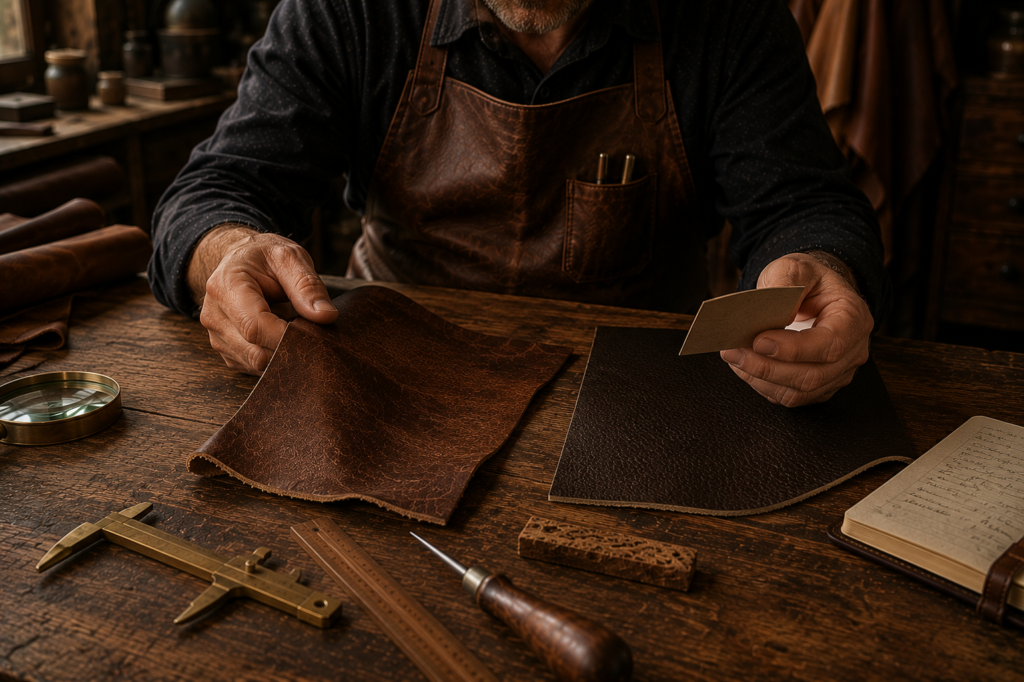
Even careful shoppers fall into a few common traps when trying to figure out if something is real leather. Knowing these common mistakes can help you make a more informed buying decision.
One of the biggest mistakes is assuming a high price automatically means real leather. While real leather often costs more, pricing alone isn’t proof. Some synthetic products are priced high due to branding or design, not the material itself.
Another common mistake is believing that anything labeled “genuine leather” is automatically premium quality. As covered earlier, genuine leather is real, but it’s not the top grade. Treating that label as a guarantee of top quality can lead to disappointment later.
Relying only on smell is another pitfall. While real leather usually has a distinct scent, some synthetic materials are designed to mimic that smell closely. Smell can support your judgment, but it shouldn’t be the only factor you trust.
It’s also easy to skip over product descriptions and care labels, but these often contain useful details about the actual material, tanning process, or maintenance needs. Taking a few extra seconds to read them can prevent confusion down the line.
Finally, many buyers make the mistake of relying on just one test, like touch alone or smell alone, instead of combining a few checks together. A single clue can be misleading, but looking at texture, grain, smell, and flexibility together gives a much clearer picture.
Avoiding these mistakes puts you in a much stronger position as a buyer. Identifying real leather is only the first step. The next is understanding which type of leather is the best fit for your jacket, depending on your needs and preferences.
Which Leather Is Best for a Jacket?
There’s no single leather that’s automatically the “best” choice for every jacket. What works well for one person might not suit another, and that comes down to how the jacket will actually be used. Someone looking for daily wear might prioritize different qualities than someone shopping for a winter coat or a rugged riding jacket.
A few factors really matter here: durability, comfort, weight, weather conditions, personal style, and of course, budget. Some leathers are built to handle rough use, while others focus more on softness and appearance. Some hold up better in cold weather, while others perform best in mild climates.
If you’re not sure where to start, think about how you’ll use the jacket most often. Choose cowhide if durability and long-term wear are your top priorities. Choose lambskin if you prefer a softer feel and a more refined appearance for everyday fashion. Choose sheepskin if warmth and insulation matter most in colder climates. If you’re still comparing options, the Quick Recommendations by Use Case table below provides a simple side-by-side guide to help you make the right choice.
The next few sections will help you match different types of leather to different needs, starting with the best choice for everyday wear.
Best Leather for Everyday Wear
For most people, cowhide is the most practical leather for an everyday jacket. It offers a strong balance of durability, comfort, and long-term value, making it a dependable choice for regular use.
One of cowhide’s biggest advantages is its toughness. It naturally resists scratches, scuffs, and the wear that comes from commuting, traveling, or spending time outdoors. Because of its dense fiber structure, it holds its shape well and can remain in good condition for many years with proper care.
Although a new cowhide jacket may feel firm at first, it becomes more comfortable over time. As the leather breaks in, it softens and gradually molds to your body, creating a more natural fit. Many people find that a well-worn cowhide jacket feels even better after months of regular use.
Cowhide is also a smart choice for buyers who want long-term value. While it may cost more than some lower-grade materials, its durability often means it lasts much longer, reducing the need for frequent replacement. For anyone looking for a reliable jacket to wear throughout the week, cowhide is a practical and dependable option.
If you prefer a softer feel from the beginning, top-grain cowhide can also be worth considering. It has a smoother surface and a more flexible feel while still offering much of the strength and durability associated with cowhide.
Everyday durability is only one factor when choosing leather. If your priority is a softer feel, lighter weight, and a more refined appearance, the next section explores the Best Leather for Fashion.
Best Leather for Motorcycle Riding
For motorcycle jackets, thick cowhide is one of the most commonly recommended leather types. It is widely used because of its durability and strong abrasion resistance, making it well suited for the demands of regular riding. Many riders choose cowhide because it can handle frequent use while maintaining its shape over time.
One of the key strengths of thick cowhide is its ability to stand up to demanding conditions. It resists everyday wear and repeated use well. While it may feel firm when new, it gradually becomes more comfortable as it breaks in. Over time, the leather softens and adapts to the wearer’s movements without losing much of its strength.
Another option found in some motorcycle jackets is goatskin. It offers a good balance of strength and flexibility, giving riders a jacket that feels lighter and moves more easily while still providing dependable durability. This makes it a practical choice for those who want comfort along with solid performance.
It’s also important to remember that the leather itself is only one part of a motorcycle jacket. The overall construction, including quality stitching, secure closures, a proper fit, and protective armor where appropriate, plays an important role in rider protection. Leather can improve durability and abrasion resistance, but no leather jacket alone can guarantee protection in every riding situation.
For riders who need warmth as well as comfort, the next section explores the Best Leather for Cold Weather.
Best Leather for Cold Weather
For cold weather, sheepskin—known as shearling when the wool remains attached—is one of the best choices. Its natural wool lining traps warm air close to the body, providing excellent insulation without making the jacket feel excessively heavy. This unique combination of warmth and comfort makes shearling especially well suited for harsh winter conditions.
Because its primary strength is insulation rather than abrasion resistance, sheepskin is commonly used for aviator jackets, winter coats, and cold-weather footwear instead of rugged motorcycle jackets designed for heavy-duty protection.
Quick Recommendations by Use Case
Choosing the right leather depends on how you plan to use your jacket. Some leathers are better for everyday comfort, while others are better suited for durability, warmth, or a refined appearance. The table below provides a quick guide to help match common needs with the most suitable leather type.
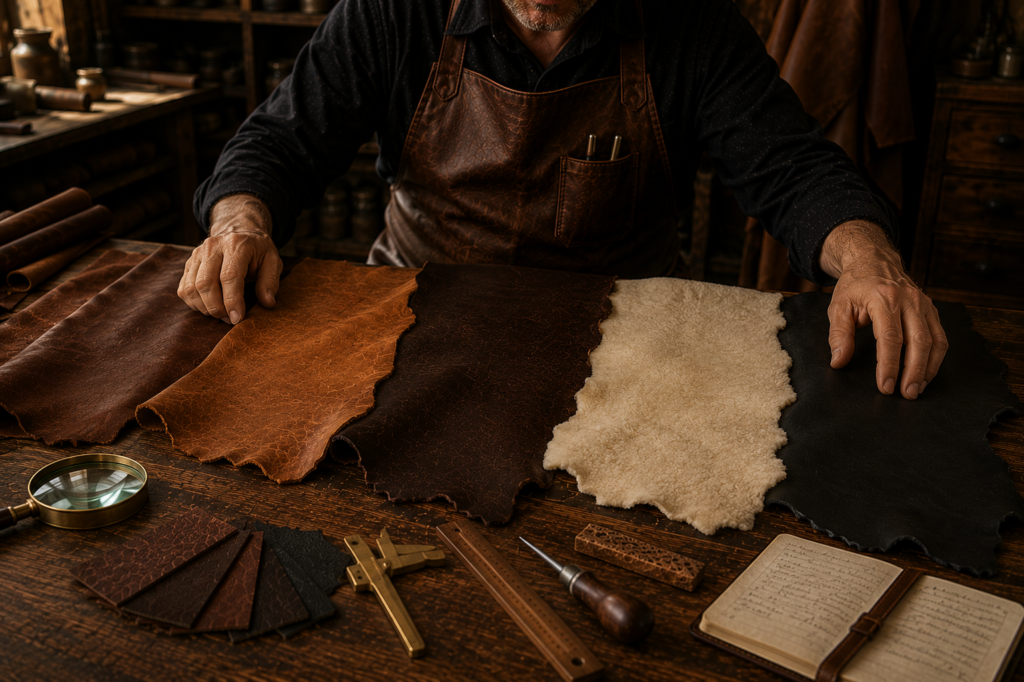
| Use Case | Recommended Leather | Why It Fits |
| Everyday Wear | Cowhide | Durable, dependable, and comfortable with regular use. |
| Fashion & Style | Lambskin | Soft, lightweight, and known for its smooth appearance. |
| Motorcycle Riding | Thick Cowhide | Strong abrasion resistance and long-lasting durability. |
| Cold Weather | Sheepskin | Natural insulation provides warmth without excessive weight. |
| Budget-Friendly Option | Genuine Leather | Real leather that is often available at a more affordable price. |
| Long-Term Durability | Full-Grain Cowhide | Ages well and maintains its strength for many years. |
There is no single leather that suits every person or every situation. The right choice depends on how you plan to use the jacket, your budget, and the qualities that matter most to you. Understanding these differences makes it easier to choose a jacket you’ll be happy with for years. If you’re ready to shop, browse our Leather Jacket Collection.
Now that you know how to choose the right leather, the next section explains How to Care for Leather so your jacket stays in good condition for years.
A leather jacket can last for many years if you take care of it properly. Regular care helps keep the leather looking good, feeling flexible, and staying strong through everyday wear. Simple habits like gentle cleaning and proper storage can make a big difference over time.
The good news is that leather care doesn’t have to be difficult or time-consuming. The following sections cover easy steps anyone can follow to help protect a leather jacket and keep it in good condition, starting with Regular Cleaning.
Regular Cleaning
Regular cleaning is one of the easiest ways to help a leather jacket last longer. Dust, dirt, and other small particles can build up on the surface over time. If they’re left in place, they may gradually affect the leather’s appearance and finish. Just a few minutes of routine care can help keep your jacket looking clean and well maintained.
For everyday cleaning, use a soft, dry microfiber cloth to gently remove dust. If the jacket needs a little more attention, a slightly damp microfiber cloth is usually enough to wipe away light dirt. Avoid scrubbing or rubbing too hard, as gentle cleaning is better for the leather’s surface.
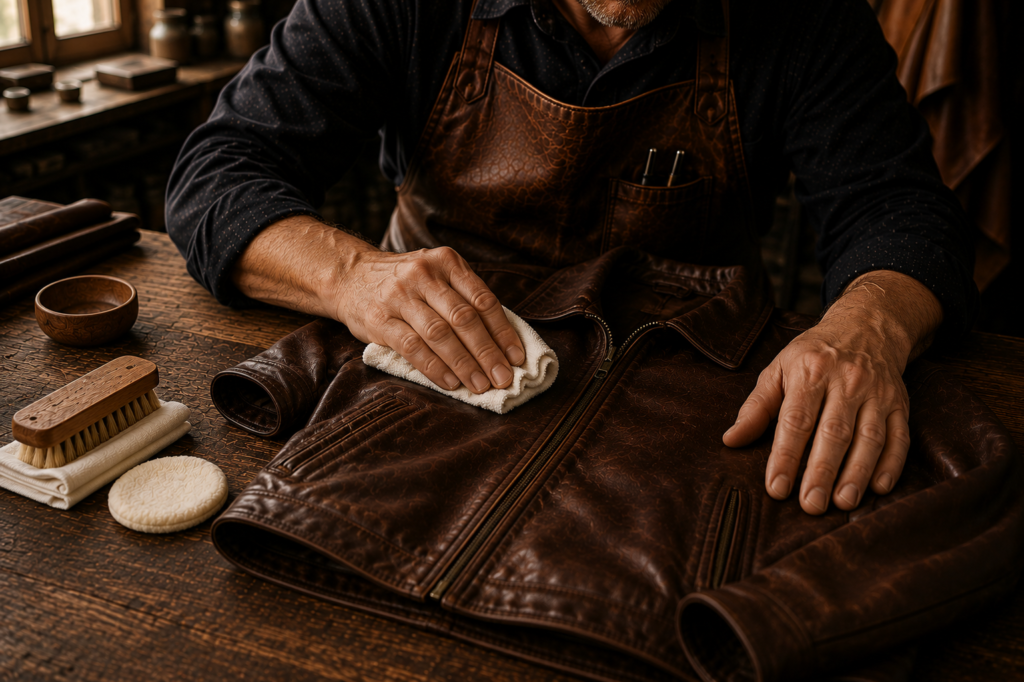
If you spill something on your jacket, wipe it away as soon as possible with a clean, soft cloth. Quick action can help reduce the chance of stains. If the jacket becomes damp from rain or cleaning, let it air dry naturally at room temperature. Keep it away from direct heat sources such as radiators, heaters, or hair dryers, as they can dry out the leather.
It’s also important to avoid harsh chemicals, bleach, alcohol-based cleaners, and excessive amounts of water unless the manufacturer specifically recommends them. These products may damage the leather or affect its finish.
Once the jacket is clean, the next step is keeping the leather soft and flexible. The following section explains how Conditioning Leather helps maintain its natural quality over time.
Conditioning Leather
Leather naturally loses some of its moisture over time, especially with regular use and changing weather. A leather conditioner helps replace some of that lost moisture, allowing the material to stay soft, flexible, and less likely to become dry or stiff. This helps the jacket continue to look and feel its best.
Not every leather jacket needs frequent conditioning. The right time depends on several factors, including how often you wear the jacket, the climate where you live, and the care instructions provided by the manufacturer. A jacket worn regularly in a dry environment may have different needs than one that’s only used occasionally.
When it’s time to condition your jacket, choose a product made specifically for leather. Before applying it to the entire jacket, test it on a small hidden area, such as the inside of a hem or under the collar. This lets you check for any unexpected changes in color or texture before treating the visible surface.
It’s also important not to use more conditioner than needed. Applying too much can sometimes affect the leather’s appearance or leave it feeling heavier or slightly greasy. Following the product directions and using a light application is usually the safest approach.
After keeping the leather clean and conditioned, proper storage is the next step in protecting your jacket. The following section explains the best practices for Proper Storage.
Proper Storage
Proper storage is an important part of caring for a leather jacket. Even when you are not wearing it, the way it is stored can affect its shape, appearance, and overall condition. Good storage habits help reduce unnecessary stress on the leather and can extend the life of the jacket.
Always hang your jacket on a wide, sturdy hanger. This helps support the shoulders and allows the jacket to keep its natural shape. Thin wire hangers can cause the shoulders to lose their form over time, especially if the jacket is heavy.
Choose a cool, dry, and well-ventilated place for storage. Leather does best in an environment with good airflow. Avoid leaving it in direct sunlight, as long periods of sun exposure can cause fading and make the leather dry out. Damp areas, such as humid basements or poorly ventilated closets, should also be avoided because excess moisture can affect the leather over time.
If you plan to store the jacket for an extended period, place it in a breathable garment bag. This helps protect it from dust while still allowing air to circulate. Avoid using plastic bags, as they can trap moisture around the leather and create conditions that may lead to unwanted damage.
Proper storage is only part of protecting leather. Everyday exposure to rain and strong sunlight can also affect its condition. The next section explains how to **Protect Leather from Water and Sunlight**.
Protecting Leather from Water and Sunlight
Leather can handle occasional light moisture, but it should not stay wet for long periods. If your jacket gets caught in light rain, there is usually no need to worry. The important thing is to remove excess moisture and let the leather dry properly to help maintain its condition.
If the jacket becomes wet, gently blot the surface with a soft, clean cloth. Do not rub the leather, as this may affect the finish. After removing the extra water, hang the jacket on a sturdy hanger and allow it to air dry naturally at room temperature. Avoid using direct heat sources such as radiators, heaters, or hair dryers. High heat can cause the leather to dry too quickly, which may leave it feeling stiff or affect its appearance.
Sunlight is another factor to keep in mind. While wearing a leather jacket outdoors is perfectly normal, long-term exposure to direct sunlight can gradually fade the color and dry out the leather. When you are not wearing the jacket, store it away from windows or other places where it receives strong sunlight for extended periods.
If the manufacturer recommends it, you may also use a leather protector that is designed for your specific type of leather. These products can provide an extra layer of protection in certain conditions, but they should always be used according to the product instructions.
Knowing how to protect leather is important, but avoiding common mistakes is just as helpful. The next section covers Things to Avoid when caring for a leather jacket.
Things to Avoid
Just as important as knowing what to do is knowing what not to do. A few simple mistakes can shorten the life of a leather jacket, even if you’re otherwise taking good care of it.
- Don’t machine wash a leather jacket. The agitation and water exposure can damage the material beyond repair.
- Avoid harsh chemicals, bleach, or alcohol-based cleaners unless the manufacturer specifically recommends them, since these can dry out or discolor the leather.
- Never dry leather using direct heat sources like radiators, heaters, or hair dryers. Direct heat can dry out the leather, making it feel stiff and increasing the risk of cracking over time.
- Avoid storing your jacket in plastic bags for long periods, since leather needs to breathe. Trapped moisture can lead to mold or mildew.
- Don’t leave leather in damp places for extended periods, as excess moisture weakens the material over time.
- Avoid prolonged direct sunlight when storing your jacket, since UV rays can fade color and dry out the leather.
Many common leather problems are caused by small, avoidable mistakes rather than regular wear. Sticking to good habits is usually enough to keep a leather jacket looking great for years.
To make all of this easier to remember, here’s a quick checklist you can refer back to anytime.
Quick Leather Care Checklist
With so many care tips to remember, having everything in one simple list makes it much easier to stay consistent. Here’s a quick checklist you can refer back to whenever you need a reminder.
- [ ] Wipe away dust regularly with a soft microfiber cloth.
- [ ] Clean spills as soon as possible.
- [ ] Let wet leather air dry naturally.
- [ ] Condition leather when appropriate, following the manufacturer’s care instructions.
- [ ] Store the jacket on a wide, sturdy hanger.
- [ ] Keep it in a cool, dry, well-ventilated place.
- [ ] Use a breathable garment bag for long-term storage.
- [ ] Avoid direct heat and prolonged direct sunlight.
- [ ] Avoid harsh chemicals unless recommended by the manufacturer.
Leather doesn’t need constant attention, just consistent, simple habits. Following this checklist regularly is usually enough to keep a leather jacket looking and feeling great for years.
Even with the best care habits, though, a lot of confusion still exists around leather in general. Next, let’s clear up some of the most common myths people believe about it.
Common Leather Myths
Leather has been used for thousands of years, yet it’s still surrounded by common myths and misunderstandings. Some of these misconceptions seem harmless, while others can lead buyers to make poor purchasing decisions or care for their leather items the wrong way. Separating fact from fiction can save you money, disappointment, and unnecessary guesswork. Let’s start with one of the most common misconceptions: the belief that “genuine leather” automatically means the best leather.
Myth: Genuine Leather Means the Best Leather
This is probably the most common myth about leather, and it’s easy to see why people believe it. The word “genuine” naturally sounds like it should mean top quality, but in the leather world, it doesn’t work that way.
“Genuine leather” simply confirms that a product is made from real animal leather rather than a synthetic imitation. It says nothing about how high-quality that leather actually is.
The true quality of a leather product depends on several factors: the grade of leather used, the quality of the original hide, how it was tanned, and the overall construction and craftsmanship of the finished item. Two products can both be labeled “genuine leather” and still feel completely different in durability and appearance.
Generally speaking, full-grain and top-grain leather are considered higher grades than genuine leather, offering better durability and a more natural look over time. But rather than relying on labels alone, it’s worth paying attention to how a product is made, not just what it’s called.
So next time you see “genuine leather” on a tag, take it as a sign that the material is real, not necessarily a sign that it’s the best option available.
Speaking of misunderstandings, there’s another myth about leather that catches a lot of people off guard, especially when it rains: the idea that real leather is waterproof.
Myth: Real Leather Is Waterproof
Many people assume that because leather feels sturdy and durable, it must also be waterproof. In reality, that’s not quite true.
Real leather is naturally water-resistant to a certain degree, thanks to its dense fiber structure, but it isn’t fully waterproof. Light rain or a bit of moisture usually isn’t a big deal, especially if the leather is allowed to air dry properly afterward.
The problem comes with prolonged exposure to water. If leather stays wet for extended periods, it can become stiff, lose its shape, or even develop discoloration over time. Water that soaks in deeply can also affect the fibers underneath, weakening the material gradually.
Some leather protectors and sprays can help improve water resistance when recommended by the manufacturer, giving extra protection during light rain or unexpected splashes. However, even with these products, leather still isn’t completely waterproof, and it shouldn’t be treated as such.
So while a leather jacket can handle the occasional drizzle without much trouble, soaking it or wearing it through heavy rain regularly isn’t a good idea.
Water isn’t the only thing people misunderstand about leather jackets, though. There’s another myth that comes up just as often, especially when the seasons change: the idea that leather jackets are only meant for winter.
Myth: Leather Jackets Are Only for Winter
A lot of people assume leather jackets are strictly cold-weather gear, something you pack away the moment spring arrives. But that’s not entirely accurate.
Whether a leather jacket works for a particular season really depends on the type of leather, the lining, the overall design, and your local climate. Lightweight leather jackets, especially those without heavy lining, can actually be quite comfortable during mild spring and fall weather, offering a bit of wind protection without feeling too warm.
On the other end, insulated or shearling-lined leather jackets are built specifically for colder conditions, making them a better fit for winter rather than year-round wear.
That said, leather jackets generally aren’t the best choice in very hot weather. Depending on the thickness of the leather and the temperature outside, wearing one in the middle of summer can feel uncomfortable or overly warm.
So rather than thinking of leather jackets as a single “winter-only” item, it’s more accurate to say that different styles and constructions suit different seasons and climates.
Leather jackets aren’t the only thing people misunderstand, though. There’s also a lot of confusion around the terms used to describe leather alternatives, especially when it comes to “faux leather” and “vegan leather.”
Myth: Faux Leather and Vegan Leather Are Always the Same
Many people use “faux leather” and “vegan leather” interchangeably, assuming they mean exactly the same thing. While the two terms are closely related, they aren’t always identical.
Faux leather typically refers to synthetic materials designed to imitate real leather, most commonly made from polyurethane (PU) or PVC. It’s a fairly straightforward term that’s been around for decades and usually points to a plastic-based alternative.
Vegan leather, on the other hand, is a broader term. It includes synthetic materials like PU and PVC, but it can also refer to newer, plant-based alternatives made from materials like cork, cactus, or pineapple fibers.
This means not all vegan leather is plant-based. Plenty of vegan leather products are still made from the same synthetic materials used in traditional faux leather. At the same time, not all faux leather is marketed or labeled as vegan, even though it technically qualifies.
In short, the two terms overlap quite a bit, but they aren’t always describing the exact same material. Knowing this can help you read product labels more carefully instead of assuming both terms always mean one specific thing.
With these common myths cleared up, it helps to see everything side by side. Here’s a quick summary comparing each myth with the actual facts.
Quick Myth vs Fact Summary
With so many misconceptions floating around, it helps to see everything laid out clearly in one place. Here’s a quick summary you can refer back to anytime.
| Myth | Fact |
|—|—|
| Genuine leather always means the best leather. | Genuine leather is real leather, but full-grain and top-grain are considered higher quality grades. |
| Real leather is waterproof. | Real leather is water-resistant to a degree, but not fully waterproof. |
| Leather jackets are only for winter. | Different leather types and linings make some jackets suitable for spring, fall, or winter. |
| Faux leather and vegan leather are always the same. | The terms overlap, but vegan leather can also include plant-based materials, not just synthetics. |
Understanding these facts can help you make smarter decisions, whether you’re buying a leather jacket or simply caring for one you already own.
Now that the common myths are cleared up, let’s tackle some of the specific questions people often ask about leather.
A Few More Leather Terms Worth Knowing
As you learn more about leather, you’ll come across a few industry terms that aren’t always explained. Understanding them can make it easier to compare leather products and recognize quality differences.
Hide vs. Skin
A hide comes from larger animals such as cattle or buffalo, while a skin comes from smaller animals like goats, sheep, or deer. Although both are processed into leather, these terms have different meanings within the leather industry.
Nap
Nap is the soft, raised fiber texture found on suede and nubuck. Because the fibers naturally lie in different directions, the surface may appear lighter or darker depending on how it is brushed.
Loose Grain
Loose grain is a manufacturing defect in which the grain layer begins to separate slightly from the fibers beneath it. Unlike natural scars or wrinkles, loose grain can reduce both the appearance and long-term quality of the leather.
Break-In Period
The break-in period is the time it takes for a new leather product to soften and adapt to regular use. Lambskin usually requires very little break-in time, while thicker cowhide often becomes more comfortable after several weeks of wear.
Wet Blue
Wet Blue is leather immediately after chrome tanning, before it has been dyed or finished. It gets its name from the pale blue tint left by chromium salts during the tanning process.
Crust Leather
Crust leather is tanned and dried leather that has not yet been dyed or finished. At this stage, manufacturers can still apply different colors, finishes, and protective coatings depending on the final product.
Frequently Asked Questions
Introduction
By now, you’ve learned quite a bit about leather, from the different types and grades to proper care and some common myths along the way. Even so, a few practical questions often come up when people are getting ready to buy.
Below are quick, straightforward answers to some of the most common questions about leather. These are the questions buyers often ask before making a final decision.
Let’s begin with one of the most common questions about leather.
What Is the Highest Quality Leather?
Full-grain leather is generally considered the highest quality leather available. It keeps the hide’s natural grain completely intact, which gives it excellent durability and a unique texture that improves with age. Over time, full-grain leather develops a rich patina, and with proper care, it can last for many years, sometimes decades. That said, “highest quality” doesn’t always mean “best for every purpose.” If comfort and softness matter more to you than raw durability, a leather like lambskin might actually suit your needs better, even though it isn’t ranked as high in terms of grade.
Is Genuine Leather Real Leather?
Yes, genuine leather is real animal leather, not a synthetic material. The confusion usually comes from the name itself, since “genuine leather” sounds like it should mean premium quality, but it’s actually a broad industry term that simply confirms the material is real. It doesn’t tell you much about the leather’s grade or overall quality. Full-grain and top-grain leather are generally considered higher grades, offering better durability and a more natural appearance over time. So while genuine leather is authentic and not fake, it sits below those two grades when it comes to overall quality.
Which Leather Is Best for Jackets?
The best leather for a jacket really depends on how you plan to use it. Cowhide is a solid choice for everyday wear, since it’s thick, tough, and built to handle daily use for years. If softness and style matter more to you, lambskin offers a lighter, more fashion-forward feel. For cold climates, sheepskin, often called shearling, provides excellent warmth and natural insulation. Goatskin is another good option, offering a nice balance between durability and flexibility without being too heavy or too delicate. At the end of the day, there’s no single leather that works best for everyone. It comes down to your priorities, whether that’s toughness, comfort, warmth, or everyday versatility
What Is the Difference Between Full-Grain and Top-Grain Leather?
The main difference comes down to how the surface is treated. Both leathers come from the outer layer of the hide, but full-grain leather keeps its natural surface completely untouched, while top-grain leather is lightly sanded or buffed to remove imperfections. This gives full-grain leather a more rugged, authentic look, along with greater durability and a richer patina that develops over time. Top-grain leather, on the other hand, has a smoother, more uniform appearance and tends to feel softer right from the start. Neither one is automatically better, they simply offer different qualities depending on whether you prefer natural texture or a more refined, polished finish.
Is Lambskin Better Than Cowhide?
Neither leather is universally better since they’re really designed for different purposes. Lambskin is softer, lighter, and known for its smooth, comfortable feel, which is why it’s often chosen for fashion-forward jackets that prioritize a refined look and easy wearability. Cowhide, on the other hand, is thicker and more durable, making it a stronger choice for everyday wear, rougher conditions, or jackets meant to last through years of regular use. Whether lambskin or cowhide is the “better” pick really comes down to what you value more, comfort and style, or long-term toughness and durability.
How Long Does a Leather Jacket Last?
A well-made leather jacket can last for many years, and in some cases, even decades with proper care. Exactly how long depends on several factors, including the type and quality of leather used, how often the jacket is worn, how well it’s maintained, and how it’s stored when not in use. A high-quality jacket that’s rarely cleaned or conditioned may not hold up as well as a more modest one that’s cared for consistently. Simple habits like regular cleaning, conditioning when appropriate, and storing the jacket properly can go a long way in extending its life, sometimes far beyond what you’d expect.
Can a Leather Jacket Get Wet?
Yes, a leather jacket can handle a little moisture, but it shouldn’t stay wet for extended periods. Light rain or the occasional splash is usually nothing to worry about, especially if you deal with it soon after. If your jacket does get wet, gently blot the surface with a soft cloth to remove excess moisture, then let it air dry naturally at room temperature. Avoid using direct heat sources like heaters or hair dryers to speed up the process, since quick heat can dry out the leather and cause damage. With a little patience, your jacket should be just fine.
How Do I Know If Leather Is Real?
The clearest way to identify real leather is to look at several signs together, including the grain pattern, texture, smell, and how the material responds when gently pressed or flexed. We’ve already covered these checks in detail earlier in this guide under “How to Identify Real Leather,” along with simple tests you can use before buying. Looking at multiple characteristics together is always more reliable than relying on a single sign.
Does Leather Crack Over Time?
Only if it’s neglected. Cracking comes from dryness, heat, or sun exposure — not from age itself. Follow the care steps outlined earlier in this guide and your leather is far more likely to develop a rich patina than to crack.
How Should I Store a Leather Jacket?
Use a wide, sturdy hanger in a cool, dry spot, and a breathable garment bag for long-term storage. We walk through the full storage steps earlier in this guide under Proper Storage, and the complete checklist is in Quick Leather Care Checklist — the short version is: avoid plastic bags, damp rooms, and direct sunlight.”
Conclusion
Leather is a lot more nuanced than most people realize before diving into the details. From understanding what leather actually is and how it’s made, to learning the differences between grades like full-grain, top-grain, and genuine leather, there’s a lot that goes into a single jacket you might otherwise take for granted.
Understanding what is leather, how leather is made, how to recognize quality, and how different leather types perform gives you the knowledge to choose products with confidence and appreciate the craftsmanship behind genuine leather.
Final Insight: The quality of a leather product is rarely determined by a single label or specification. Leather type, grade, finish, construction quality, and ongoing care all contribute to how it performs over time. Looking at these factors together provides a far more reliable way to evaluate leather than relying on marketing terms alone.
The right leather for you isn’t necessarily the most expensive or the most talked-about option. It’s the one that fits your lifestyle, your climate, your budget, and how you actually plan to use it. Some people prioritize durability, others comfort, and both are perfectly valid choices.
“With everything covered here, you’re better prepared to evaluate a leather jacket, or any leather product, and choose the option that best fits your needs.”